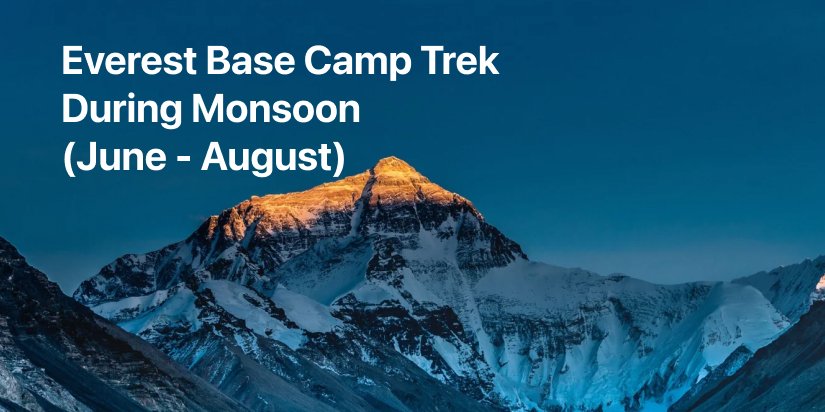
Trekking to Everest Base Camp in monsoon (June to mid-September) is possible but rarely enjoyable. Expect daily rain, leeches below 3,000 m and flight headaches, with rare clear windows that few trekkers can bank on. If summer is your only option, you can still do it, but you need to go in with realistic expectations and plenty of spare days.
Plenty of travellers only have time off in June, July or August, and it is natural to wonder whether the world’s most famous trek works in summer. The honest answer is that it can be done, and a small number of trekkers genuinely enjoy the quiet, green, misty Khumbu. But most people who trek in the monsoon do not get the views they came for.
This guide gives you a clear, practical picture of what the monsoon means on the Everest Base Camp trek, month by month, so you can decide whether to go ahead or change your plans. For a comparison with all four seasons, see our guide to the best time to trek to Everest Base Camp.
In this guide
- What the Monsoon Means in the Khumbu
- June, July and August Compared
- Visibility: Where the Cloud Clears and Where It Does Not
- Leeches, Mud and Landslides
- Lukla Flights in the Monsoon
- The Upside: Quiet Trails and Green Valleys
- Health and Practical Tips for Summer Trekkers
- Is the Everest Base Camp Trek Worth It in the Monsoon?
- Frequently Asked Questions
- Replanning Your Everest Base Camp Trek
What the Monsoon Means in the Khumbu
The South Asian monsoon usually reaches eastern Nepal in early to mid-June and retreats in the second half of September. Roughly three-quarters of Nepal’s annual rainfall falls in these few months. Warm, moist air rises against the Himalaya and drops heavy rain on the southern slopes, including the lower part of the Everest trail.
The Khumbu sits relatively far north, so the upper valleys receive less rain than places like Pokhara or the Annapurna foothills. Above Namche, rain often turns into drizzle or low cloud rather than heavy downpours, and at Gorak Shep and Base Camp, precipitation may fall as light snow. What rarely changes is the cloud: the peaks can stay hidden for days at a time.
A typical monsoon day starts with a chance of clear or partly cloudy skies in the early morning. Cloud builds quickly from the valleys, and by late morning or early afternoon, rain or drizzle is common. Evenings and nights often bring the heaviest rain lower down.
June, July and August Compared
Not all monsoon months are equal. June and August sit at the edges of the season, while July is usually the wettest month. Here is how they compare on the Everest Base Camp trek.
| Month | Rainfall | Trail mud and leeches | Visibility | Crowds | Lukla flight risk | Verdict |
|---|---|---|---|---|---|---|
| June | Increasing through the month as the monsoon arrives | Mud building; leeches appearing below Namche | Some clear mornings early in June | Very low | Moderate, rising late in the month | Possible in early June, harder later |
| July | Heaviest of the year | Muddy trails; leeches common in lower forests | Poor; peaks hidden for days | Very low | High; multi-day delays common | Not recommended for views |
| August | Heavy, easing slightly late in the month | Muddy; leeches still active low down | Poor to fair; occasional breaks | Very low | High | Only with a very flexible schedule |
| Autumn snapshot (Oct) | Very low | Dry trails, no leeches | Excellent | Peak | Low | Best alternative if you can move your dates |
If you have any flexibility, even moving your trip to late September can make a big difference, as the monsoon usually retreats during the second half of that month. For the full autumn picture, read our guide to the Everest Base Camp trek in autumn.
Visibility: Where the Cloud Clears and Where It Does Not
The lower Khumbu, from Lukla through Phakding to Namche Bazaar, is the wettest part of the trail. The forests here are lush and beautiful in summer, with waterfalls pouring off the cliffs, but views of the big peaks are rare. Expect to walk in cloud or rain for much of this section.
Above Namche, conditions often improve slightly. The valleys around Pangboche, Dingboche and Pheriche are drier, and early mornings sometimes bring brief windows of clear sky. Trekkers who get lucky may see Ama Dablam or Lhotse emerge for an hour before the cloud rolls back in.
Views from Kala Patthar in the monsoon are hit or miss. On a small number of mornings, you may get a clear sunrise over Everest, but it is common to climb to the top and see nothing but white. If you trek in summer, plan to have a spare day at Gorak Shep so you can try more than once.
Leeches, Mud and Landslides
Leeches are one of the least-loved features of monsoon trekking in Nepal. On the Everest trail, they are mostly found in the damp forests below about 3,000 metres, particularly between Lukla, Phakding and the lower climb towards Namche. They are harmless but unpleasant. Long trousers tucked into socks, leech socks and a little salt or insect repellent help keep them off.
Mud is more of an issue than danger. Stone steps and trails become slippery, and yak trains churn up soft sections. Good waterproof boots with deep tread and trekking poles are essential.
Landslides are a real risk in the monsoon, though usually on the lower trails and access roads rather than above Namche. The road from Kathmandu to Ramechhap and routes from the south, such as the trail from Jiri or Salleri, are more exposed to slides. Local teams usually clear or reroute the main trail quickly, but it can mean detours and delays.
Lukla Flights in the Monsoon
The flight to Lukla is the biggest practical problem of a monsoon trek. Flights to Tenzing-Hillary Airport operate only in good visual conditions, and low cloud in the lower valleys or at Lukla itself often grounds them. In July and August, it is not unusual for flights to be cancelled for several days in a row.
This affects both ends of your trek. You might wait in Kathmandu for your flight in, and you might be stuck in Lukla waiting for a flight out. Many monsoon trekkers add two or three buffer days to their itinerary, and some budget for a helicopter out of Lukla if they risk missing an international connection.
If you would rather avoid the flight uncertainty altogether, look at our guide to alternative routes to Everest Base Camp, including the Jiri and Salleri approaches. Be aware, though, that these lower trails are wetter and more exposed to landslides in summer.
The Upside: Quiet Trails and Green Valleys
The monsoon does have real benefits. The trail is almost empty, so you have your pick of rooms and a quieter experience in every village. Lodge owners have more time to chat, and some offer discounted rooms during the off-season.
The landscape is at its greenest. Wildflowers bloom across the high pastures above Dingboche and Pheriche, streams run full and the terraced fields around the lower villages are vivid. For trekkers interested in plants, birds or photography of mist and forests, summer has its own beauty.
You may also catch the Sherpa festival of Dumje, usually held in early summer in villages such as Namche, Thame and Khumjung. It is a colourful family and community celebration, and a rare chance to see local culture without the crowds of peak season.
Health and Practical Tips for Summer Trekkers
Summer also brings some health considerations. Dengue fever cases have increased in Kathmandu and other lowland areas in recent monsoon seasons, although mosquitoes are not a concern at altitude on the Everest trail. Use insect repellent and cover up while in Kathmandu, particularly at dawn and dusk.
Water sources are more likely to be contaminated during heavy rain, so treat all drinking water with a filter, purification tablets or a UV purifier. Wet conditions also make it harder to keep feet dry, so bring spare socks and take care of blisters early.
For gear, prioritise waterproofs: a good rain jacket, waterproof trousers, a pack cover and dry bags for your clothes and sleeping bag. Quick-drying layers are better than cotton, which stays wet for days in the humid lower valleys.
Is the Everest Base Camp Trek Worth It in the Monsoon?
For most trekkers, the honest answer is no. The Everest Base Camp trek is, above all, about the views, and the monsoon hides them more often than not. Combined with leeches, mud and unreliable flights, summer can easily turn into a frustrating trip.
If your dates are fixed in summer, you still have options. You can trek in early June or late August with extra buffer days, consider a trek in a rain-shadow region, or shift the trip to late September. If you do go ahead, go with an open mind and enjoy the quiet trails, green valleys and Sherpa hospitality for what they are.
Frequently Asked Questions
Is it possible to trek Everest Base Camp in July?
Yes, it is possible, and the trail stays open. However, July is usually the wettest month, with frequent rain in the lower valleys, thick cloud higher up and a high risk of Lukla flight cancellations. Most trekkers find July disappointing for views.
Does it rain at Everest Base Camp itself?
Base Camp, at 5,364 m, receives much less rain than the lower trail. Precipitation often falls as light snow or sleet, but low cloud is common and can hide the surrounding peaks, including Everest, for days at a time.
When does the monsoon start and end in Nepal?
The monsoon usually reaches eastern Nepal in early to mid-June and withdraws in the second half of September. Exact timing varies from year to year, so late September conditions can be either wet or already clear.
Is the Everest Base Camp trek worth it in summer?
Only if you have flexible dates, extra buffer days and realistic expectations. Summer offers quiet trails and green valleys, but mountain views and flights are unreliable. If views of Everest are your main goal, autumn or spring is a far better choice.
Replanning Your Everest Base Camp Trek
If this guide has you rethinking your dates, you are not alone. Head to our Everest Base Camp trek guide to explore routes and itineraries, compare the options on our seasonal planning page, or get in touch with Zeal Nepal Trek for honest advice on the best window for your schedule.