Last updated: 24 September 2026
Autumn (October to November) is the clearest season on the Everest Base Camp trek. The monsoon rinse leaves deep-blue skies and postcard views of Everest, with crisp but comfortable days on the trail. September is the shoulder month that bridges the monsoon and the main season, and it rewards flexible trekkers with quieter trails.
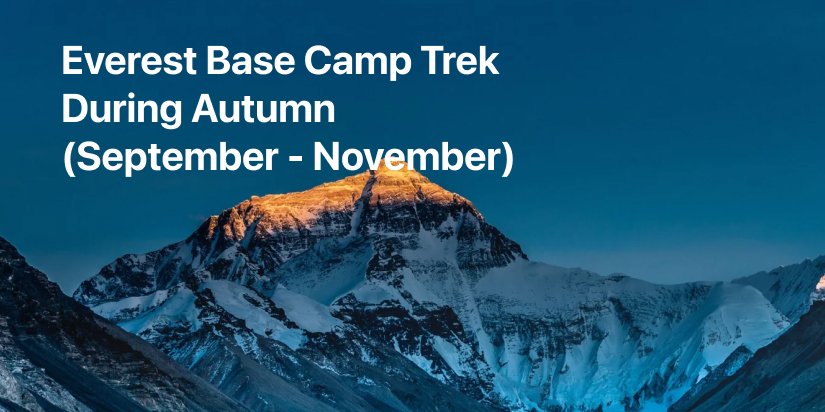
If you have ever seen a photo of Ama Dablam against a perfectly blue sky or Everest’s summit plume glowing orange from Kala Patthar, there is a good chance it was taken in autumn. This is the season most guides recommend to first-time trekkers, and it is the busiest time of year on the trail.
This guide focuses only on the autumn months: what the weather is really like in September, October and November, how Nepal’s big festivals affect your trip, where the crowds bunch up and which month suits which kind of trekker. For a comparison with every other season, see our guide to the best time to trek to Everest Base Camp.
In this guide
- Why Autumn Has the Best Views on the Trek
- Autumn Weather and Temperatures by Month
- September, October or November: Which Month to Choose?
- Dashain, Tihar and Mani Rimdu: Festivals in Autumn
- Autumn Crowds: What to Expect on the Trail
- Daylight, Walking Hours and Flights in Autumn
- Autumn vs Spring for the Everest Base Camp Trek
- What to Pack for an Autumn Trek
- Frequently Asked Questions
- Plan Your Autumn Everest Base Camp Trek
Why Autumn Has the Best Views on the Trek
From June to mid-September, the South Asian monsoon pushes warm, moist air up into the Himalaya. When it retreats, it leaves the atmosphere scrubbed clean of dust and haze. Cold, dry air from the north then settles over the Khumbu, and the result is weeks of stable, cloudless mornings.
A typical autumn day follows a reliable pattern. Mornings are clear and still, with sharp visibility right across the range from Lhotse to Thamserku. Some cloud often builds in the lower valleys around midday and may drift up towards Dingboche or Lobuche in the afternoon, before clearing again at dusk. That is why most autumn trekkers start early and reach viewpoints before lunch.
Because the air is so dry, colours look richer and distances look shorter than they are. Ridges, ice flutings and the Khumbu Icefall stand out in detail that simply is not visible in hazy spring afternoons or cloudy monsoon weeks.
Autumn Weather and Temperatures by Month
Autumn temperatures drop steadily as the season goes on. September still carries some warmth and humidity from the monsoon, October is cool and crisp, and by late November the nights above 4,500 metres feel properly wintry. The figures below are typical ranges rather than guarantees.
| Location (altitude) | September day / night | October day / night | November day / night |
|---|---|---|---|
| Lukla (2,860 m) | 18 to 20°C / 10 to 12°C | 15 to 17°C / 5 to 7°C | 12 to 14°C / 0 to 3°C |
| Namche Bazaar (3,440 m) | 14 to 16°C / 5 to 8°C | 12 to 14°C / 0 to 3°C | 8 to 11°C / -4 to -2°C |
| Dingboche (4,410 m) | 10 to 12°C / 0 to 2°C | 8 to 10°C / -6 to -3°C | 4 to 7°C / -10 to -7°C |
| Gorak Shep (5,164 m) | 6 to 8°C / -6 to -4°C | 4 to 7°C / -12 to -8°C | 0 to 4°C / -16 to -12°C |
Daytime walking in October and November usually feels pleasant in a base layer and light fleece when the sun is out. The real cold arrives the moment the sun drops behind the ridges, which happens early in the upper valleys. At Gorak Shep in late November, water bottles left in the dining room can freeze overnight, so a warm sleeping bag rated to around -15°C is a sensible minimum.
September, October or November: Which Month to Choose?
Each autumn month has its own character. The best one for you depends on whether you value perfect views, quieter trails or warmer nights the most.
| Month | Day / night temp (high camps) | Clarity | Crowds | Scenery | Best for |
|---|---|---|---|---|---|
| September | 6 to 12°C / -6 to 2°C | Improving; cloud and showers common early in the month | Low to moderate | Green valleys, late wildflowers, full rivers | Flexible trekkers wanting quieter trails |
| October | 4 to 10°C / -12 to -3°C | Excellent, the clearest month of the year | Peak | Sharp peaks, golden fields in the lower valleys | First-timers and photographers |
| November | 0 to 7°C / -16 to -7°C | Excellent and very stable | Moderate, easing through the month | Bronze and amber grasses, crisp light | Trekkers who want views without the peak crowds |
September is a gamble that often pays off in the second half of the month. The first week or two can still feel monsoonal, with rain below Namche and cloud around the peaks, and Lukla flights can be disrupted. By late September, however, clear mornings become more common and you get the trail with far fewer people.
October is the classic choice. Visibility is at its best, the weather is stable, and flights are the most reliable of the year. The downside is that everyone knows this, so teahouses in Namche, Dingboche and Gorak Shep are at their busiest.
November is the favourite month of many guides. The views are just as good as October, the trails are calmer, and the colder nights are manageable with the right gear. Late November starts to feel like early winter above Lobuche.
Dashain, Tihar and Mani Rimdu: Festivals in Autumn
Autumn is festival season in Nepal, and it can shape your trip in ways many visitors do not expect. Dashain, the country’s biggest Hindu festival, usually falls in late September or October and lasts about two weeks. Tihar, the festival of lights, follows a few weeks later, usually in October or early November. Exact dates follow the lunar calendar and change every year.
During the main days of Dashain, many Nepali workers travel home to their families. In Kathmandu, some offices and shops close, public buses and domestic flights fill up, and prices for road transport can rise. Up in the Khumbu, most teahouses keep running because autumn is their peak earning season, but some porters and lodge staff take leave, so booking through an operator who has staff arranged helps.
In the Khumbu itself, the Sherpa festival of Mani Rimdu is held at Tengboche Monastery (3,860 m) in October or November, again depending on the lunar calendar. The masked dances and ceremonies are a wonderful cultural bonus if your dates line up, but Tengboche’s small number of lodges fill up quickly during the festival.
Autumn Crowds: What to Expect on the Trail
Autumn, and October in particular, is the busiest time on the Everest Base Camp trek. The first obvious sign is at Lukla, where morning flights run back to back. On the trail, you share bridges with yak trains, porters and other trekking groups, especially on the busy stretch between Phakding and Namche Bazaar.
The pressure points are the overnight stops. Namche has plenty of lodges and rarely runs out of rooms, but Lobuche and Gorak Shep have a limited number of teahouses. On peak October nights, independent trekkers who arrive late in the afternoon may end up in basic rooms or sleeping in the dining hall. Our guide to teahouses on the Everest Base Camp trek explains how booking works and what rooms cost.
To enjoy autumn without the crush, start walking early, consider staying in less busy villages such as Pangboche or Pheriche, and, if possible, aim for the first half of November instead of mid-October.
Daylight, Walking Hours and Flights in Autumn
Autumn days are shorter than spring days, and they shorten further as November goes on. At Namche, expect roughly 11 to 12 hours of daylight in early October, falling to around 10.5 hours by late November. In practice, that still gives you plenty of time for the usual five to seven hour walking days, but it pays to leave by 7 or 8 am so you arrive before the afternoon chill.
Flying conditions to Lukla are usually the best of the year in October and November. During peak season, most Lukla flights depart from Manthali Airport in Ramechhap rather than Kathmandu, which adds a four to five hour drive, often very early in the morning. Build at least one spare day into your itinerary in case of weather delays at either end.
The standard route itself does not change with the seasons. To see how the daily stages, distances and altitudes fit together, study our Everest Base Camp trek map and elevation profile.
Autumn vs Spring for the Everest Base Camp Trek
Autumn and spring are both prime trekking seasons, and the choice often comes down to personal preference. Autumn offers clearer skies and sharper views, particularly in the mornings, and more reliable flights. It is cooler overall, especially in November.
Spring is warmer, with rhododendron forests in bloom and the excitement of the Everest expedition season at Base Camp itself. However, it tends to be hazier by the afternoon and just as crowded, especially from late April to mid-May. Read our spring Everest Base Camp trek guide for the full picture of that season.
If the view of Everest from Kala Patthar is your top priority, autumn has the edge. If you would like warmer days and the chance to see expedition teams at Base Camp, spring may suit you better.
What to Pack for an Autumn Trek
Autumn packing is all about layers. You will walk in a T-shirt or light base layer on sunny afternoons below Namche and then need a heavy down jacket at Gorak Shep the same week. A breathable base layer, a fleece mid-layer, a windproof shell and a warm down jacket cover most conditions.
At night, a four-season sleeping bag rated to around -15°C is recommended for late October and November. Add a warm hat, liner gloves plus insulated gloves, sunglasses with good UV protection and high-factor sunscreen, since the sun is intense at altitude even when the air is cold.
Because autumn is dry, dust on the lower trail can irritate your throat. A light buff or face covering helps a lot, and it doubles as extra warmth on cold mornings.
Frequently Asked Questions
Is October the best month to trek Everest Base Camp?
October is widely considered the best month for views and weather. Skies are clear, temperatures are comfortable during the day and Lukla flights are usually reliable. The only real drawback is that it is also the busiest month, so booking teahouses ahead helps.
How cold is Everest Base Camp in November?
In November, daytime temperatures near Gorak Shep and Base Camp typically range from about 0°C to 4°C in the sun, while nights drop to around -12°C to -16°C. Wind can make it feel colder, so a warm down jacket and a sleeping bag rated to about -15°C are essential.
Is September clear enough after the monsoon?
Early September often still has monsoon cloud and rain, especially in the lower valleys. The second half of the month usually brings more clear mornings. If you trek in September, allow extra days for possible Lukla flight delays and expect some cloudy afternoons.
Autumn or spring: which is better for the EBC trek?
Autumn generally offers clearer, sharper mountain views and more reliable flights, while spring is warmer and has rhododendron blooms and the Everest climbing season. Both are excellent. Choose autumn for views and spring for warmer days and flowers.
Plan Your Autumn Everest Base Camp Trek
Autumn is prime booking season, and the best-run teahouses and guides fill up early. Start with our Everest Base Camp trek overview to map out your trip, then contact Zeal Nepal Trek to secure your dates and a guided itinerary for October or November.