Last updated: 24 September 2026
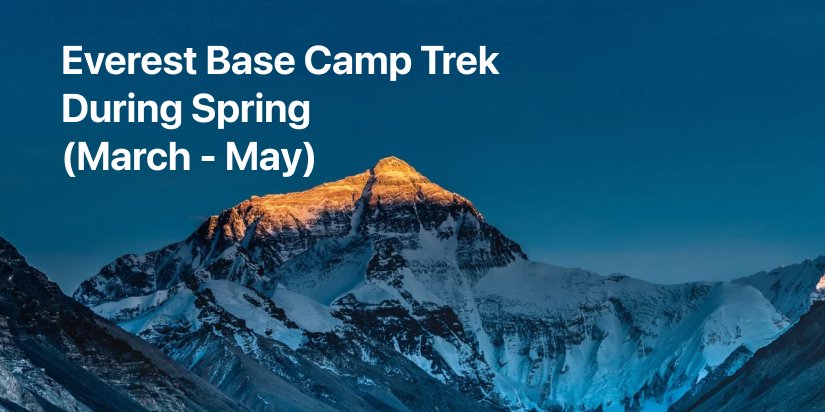
Spring (mid-March to May) is the peak season for the Everest Base Camp trek. Stable weather and blooming rhododendrons meet the world-famous Everest summit window, which means busier trails and teahouses that fill up fast. It is warmer than autumn, and it is the only season when you will see the tents of Everest expeditions spread across the Khumbu Glacier.
Spring has a special energy in the Khumbu. After a long, cold winter, lodges reopen, yak trains start moving supplies up the valley, and climbers from around the world arrive for their shot at the summit. For trekkers, it means long days, warmer walking and a trail that feels alive.
This guide covers spring only: temperatures in March, April and May, when the blooms peak, how the Everest expedition season affects crowds, and whether you need to book teahouses ahead. To compare spring with the other seasons, read our guide to the best time to trek to Everest Base Camp.
In this guide
- What Spring on the Everest Base Camp Trek Is Like
- Spring Temperatures by Month and Altitude
- March, April or May: Which Spring Month Is Best?
- Rhododendron Season in the Lower Khumbu
- Everest Summit Season and Spring Crowds
- Teahouses and Booking in Spring
- Spring vs Autumn for the Everest Base Camp Trek
- Frequently Asked Questions
- Plan Your Spring Everest Base Camp Trek
What Spring on the Everest Base Camp Trek Is Like
Spring weather in the Khumbu is generally stable and dry. Mornings are often clear, with the best views before about 10 or 11 am. As the day warms up, cloud tends to build from the valleys, and afternoons can be hazy or overcast. Short snow showers are possible at higher altitude, particularly in March and late May.
The big difference from autumn is warmth. Days in April and May feel noticeably milder, and nights at Dingboche and Lobuche are less brutal than in November. That makes spring a comfortable season for trekkers who feel the cold or who are worried about sleeping at altitude.
The trade-off is visibility. Spring air carries more dust and moisture than the scrubbed autumn air, so distant peaks can look softer, especially in the afternoon. Photographers who want razor-sharp ridges usually aim for early starts or choose autumn instead.
Spring Temperatures by Month and Altitude
Temperatures climb steadily through the season. Early March can still feel like winter above 4,000 metres, April is comfortable, and May is the warmest month before the monsoon. These are typical ranges based on seasonal averages rather than exact forecasts.
| Location (altitude) | March day / night | April day / night | May day / night |
|---|---|---|---|
| Lukla (2,860 m) | 12 to 15°C / 0 to 3°C | 16 to 18°C / 4 to 7°C | 18 to 20°C / 8 to 10°C |
| Namche Bazaar (3,440 m) | 8 to 11°C / -5 to -2°C | 12 to 15°C / 0 to 3°C | 14 to 17°C / 3 to 6°C |
| Dingboche (4,410 m) | 3 to 6°C / -12 to -8°C | 7 to 10°C / -6 to -3°C | 10 to 12°C / -3 to 0°C |
| Gorak Shep (5,164 m) | -2 to 3°C / -18 to -14°C | 3 to 7°C / -12 to -8°C | 5 to 9°C / -8 to -5°C |
Even in May, you still need a proper down jacket and a warm sleeping bag above Dingboche. The sun is intense at altitude, though, and many trekkers walk in a light base layer during the middle of the day. High-factor sunscreen and UV-rated sunglasses are essential.
March, April or May: Which Spring Month Is Best?
Each spring month offers a different balance of warmth, crowds and scenery. Use the table below to decide which one fits you best.
| Month | Day / night temp (high camps) | Crowds | Flowers and scenery | Flight risk | Highlight |
|---|---|---|---|---|---|
| March | -2 to 6°C / -18 to -8°C | Moderate, building late in the month | Snow lingering higher up; blooms starting low down | Low to moderate | Quiet trails and clear, cold mornings |
| April | 3 to 10°C / -12 to -3°C | High | Rhododendrons at their peak below Tengboche | Low | Blooms plus expedition teams arriving at Base Camp |
| May | 5 to 12°C / -8 to 0°C | High until mid-May, then easing | Greener valleys; blooms fading higher up | Moderate late in the month | Warmest nights and Everest summit season |
March is a great choice if you want spring conditions without the crowds. Early March still feels wintry above Dingboche, but the trail is quiet and views are often excellent. By late March, rhododendrons are starting to bloom in the lower forests.
April is the classic spring month. The forests between Phakding, Namche and Tengboche are covered in rhododendron blossoms, the weather is stable, and Base Camp fills up with expedition tents from early to mid-April. It is also one of the busiest times on the trail.
May is the warmest month and the height of the Everest summit season, with most summit pushes happening in the middle of the month. Afternoon cloud becomes more common, and by late May the first signs of the monsoon can arrive.
Rhododendron Season in the Lower Khumbu
Rhododendron is Nepal’s national flower, and spring is when it transforms the lower Everest region. The best displays are in the forests between Phakding and Namche Bazaar, and on the climb from the Dudh Koshi river up to Tengboche and Deboche, roughly between 2,800 m and 3,900 m.
Bloom timing moves up the valley with the season. Lower forests often start flowering in late March, while higher stands around Tengboche and Pangboche peak in April and sometimes early May. Colours range from deep red to pink and white, and the blossoms frame views of Ama Dablam and Thamserku beautifully.
If flowers are a priority, aim for early to mid-April and give yourself time on the lower trail. Many trekkers rush through these forests on the way up, but they are also a highlight of the walk back down.
Everest Summit Season and Spring Crowds
Spring is the main climbing season on Everest. Expedition teams begin arriving at Base Camp in early April and spend weeks acclimatising before summit attempts, which usually happen in May when the jet stream moves away from the summit. For trekkers, this means Base Camp becomes a colourful tent village with a real buzz.
It also means more people, animals and supplies on the trail. Yak and porter caravans carry expedition gear up the valley, and busy trekking groups bunch up at the same villages. Namche Bazaar, Dingboche, Lobuche and Gorak Shep are the tightest spots, particularly from late April to mid-May.
Please remember that expedition camps are private working spaces. Trekkers can visit the Base Camp area and the famous marker rock, but you should not wander into expedition tents or kitchens without an invitation.
Teahouses and Booking in Spring
Almost all teahouses on the main route are open in spring, but demand can outstrip supply at the smaller high-altitude stops. Gorak Shep and Lobuche have only a handful of lodges, and during peak weeks the best rooms are often reserved in advance by trekking agencies.
If you trek with a guide, they will usually book rooms ahead for you. Independent trekkers can still find beds in most villages, but you should aim to arrive by early afternoon, and you may need to accept a basic room or even a dining-room bench at the busiest spots. Our detailed guide to teahouses on the Everest Base Camp trek explains room types, prices and booking in more depth.
Spring also puts pressure on the Kathmandu to Lukla flights. During peak season, most Lukla flights leave from Manthali Airport in Ramechhap, about four to five hours by road from Kathmandu. Early morning departures are common, so plan your first night accordingly.
Spring vs Autumn for the Everest Base Camp Trek
Spring and autumn are both excellent, and both are busy. Spring wins for warmth, longer days, flowers and the Everest expedition atmosphere. Autumn wins for crisp, clear views and slightly more reliable flights, and it is the better choice if Kala Patthar views are the main goal.
If you are still undecided, read our guide to the Everest Base Camp trek in autumn and compare the two seasons month by month.
Families with school-age children often find the April school holidays in many countries line up well with spring. Our guide to the Everest Base Camp trek with kids covers pacing and safety for young trekkers.
Frequently Asked Questions
Is May a good time to trek to Everest Base Camp?
Yes. May is the warmest month of the spring season and the height of the Everest summit window, so Base Camp is at its busiest and most exciting. Mornings are usually clear, but afternoon cloud becomes more common, and late May can see the first pre-monsoon weather.
When is the Everest Base Camp trek most crowded in spring?
The busiest period is from late April to mid-May, when trekking groups overlap with expedition teams and their support crews. Namche Bazaar, Dingboche, Lobuche and Gorak Shep are the most crowded overnight stops.
Which spring month is best for Everest Base Camp?
April is the best all-round spring month, with stable weather, blooming rhododendrons and expedition teams arriving at Base Camp. Choose March for quieter trails and colder, clearer mornings, or May for warmer nights and the summit season atmosphere.
Do I need to book teahouses in advance in spring?
It is strongly recommended for Lobuche and Gorak Shep during late April and May, where lodges are limited. Lower villages such as Namche have plenty of rooms. Trekking with a guide or agency is the easiest way to guarantee a bed on the busiest nights.
Plan Your Spring Everest Base Camp Trek
Spring is a high-demand season, so early planning makes a real difference to flights, rooms and guide availability. Explore our main Everest Base Camp trek page for itineraries and practical details, and contact Zeal Nepal Trek to reserve your spring dates.