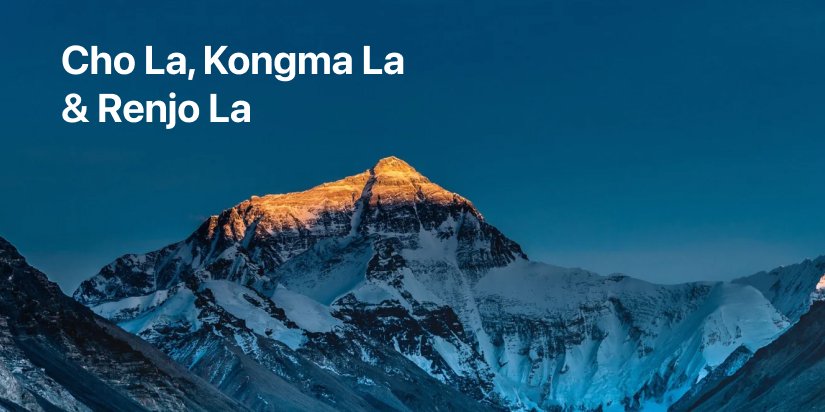
The Three High Passes — Cho La (5,420m), Kongma La (5,535m) and Renjo La (5,360m) — turn the Everest Base Camp trek into an 18-21 day loop strung through Gokyo, with Kongma La the hardest and every pass earned by a long, exposed climb. This is one of several alternative ways to trek Everest Base Camp beyond the classic route.
The Three Passes at a Glance
- Cho La — 5,420m — Approach from Dzongla, descends to Gokyo — Moderate (glacier and snow) — Views: Everest, Gokyo lakes
- Kongma La — 5,535m — Approach from Chhukung, descends to Lobuche — Hardest (loose scree and boulders) — Views: Ama Dablam, Khumbu
- Renjo La — 5,360m — Approach from Thame, descends to Gokyo — Moderate (long but steady) — Views: Everest from the north-west
Cho La: The Gateway to Gokyo
Cho La is the classic connector between the main valley and the Gokyo lakes. The approach from Dzongla is straightforward until the snow slope and glacier moraine rise shortly before the pass; cross early in the morning while the surface is firm. On the far side the trail drops steeply toward the first lakes — one of the best descents in the Himalaya.
Kongma La: The Hardest of the Three
Kongma La links Chhukung to Lobuche and is the physically hardest crossing — loose scree, boulder fields and a long, grinding climb from roughly 4,700m to 5,535m with no easy sections. Fit trekkers with previous pass experience handle it; first-timers struggle. Allow the full day and start before 7am.
Renjo La: The Scenic Route In
Renjo La connects Thame to the Gokyo valley. It is the gentlest of the trio but still a real pass — a long, steady switchback climb to a pass with the most underrated panorama in the Khumbu, looking straight across the northern face of Everest toward the lakes. Many groups cross it with a full day and fall in love with the route.
When to Cross the Passes
- Best window: October to November and April to May, when snow on the passes is manageable and visibility is high.
- Winter (Dec-Feb): possible for experienced parties but snow conditions on Cho La warrant an ice axe and crampons — and some locals close the lodges above Namche, stranding the round trip.
- Monsoon: the passes can still be crossed but the glacier sections become slippery and views are thin; not recommended.
Gear That Changes the Equation
- Trekking poles (non-negotiable on Kongma La scree).
- Microspikes or light crampons for Cho La in winter.
- A -15°C sleeping bag — nights at 5,000m are brutal.
- Glacier-comfort roping is rarely required on the standard crease routes, but your guide judges snow firmness on the day.
How the Loop Maps Out
The full Three High Passes circuit links to the EBC goal: Thame → Renjo La → Gokyo → Cho La → Dzongla → Gorak Shep → EBC → Kongma La → Chhukung → the main valley back to Namche. At 18-21 days it is a genuine expedition, and the altitude profile (sleeping above 4,500m repeatedly) demands bolder acclimatization than the classic route.
Are the Three High Passes harder than the normal Everest Base Camp trek?
Significantly — each pass adds a sustained high-altitude climb and the loop carries more summit nights above 4,500m.
Do I need crampons for the Three High Passes?
For standard-season conditions, microspikes and poles suffice; winter snow on Cho La warrants real crampons with guide supervision.
Which of the three passes is the hardest?
Kongma La (5,535m), on loose scree and boulders with the longest sustained slog.
Can a beginner trek the Three High Passes?
Not directly — build experience on the classic Everest Base Camp trek or a first Himalayan pass before attempting the trio.
Is the Cho La route better than the direct route to Gokyo?
For scenery, yes — it is the classic way in and one of the most dramatic days of any Nepal trek.
Conquer the Passes Properly
Bolster your plan by comparing this loop against the classic Everest Base Camp Trek itinerary— the passes punish poor prepping harder than any other day of the route.
Ready to Take On the Passes?
View the Everest Base Camp Trek itinerary, prices & availability →