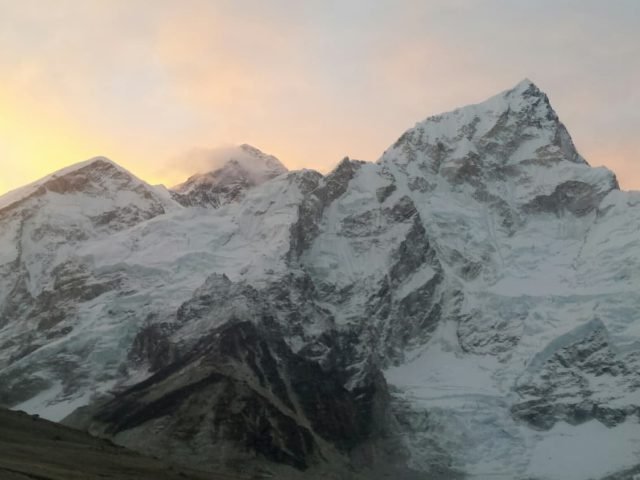
Everest Base Camp Trek
From $1,350 per person

Start here
Where to go, when to go, how hard it is and what it costs — an honest guide to trekking in Nepal from the local guides who lead these trails every season.
Trekking in Nepal means walking for several days between mountain villages, sleeping and eating in family-run lodges called teahouses, with a licensed guide and usually a porter. You don’t need to camp or carry heavy loads, and you don’t need climbing skills. You need decent fitness, time to acclimatise and the right season.
Most treks last between 5 and 20 days. A typical day starts with breakfast at 7, four to seven hours of walking with a lunch stop, and an evening around the dining-room stove.
Start with how many days you have and how high you want to go.
First time at altitude? Annapurna Base Camp (4,130 m) or Langtang Valley (3,870 m) are excellent introductions. Want the iconic one? Everest Base Camp. Want solitude? Manaslu, Tsum or Mustang. See our list of the most beautiful treks in Nepal.
Autumn (late September to November) and spring (March to May) are the main seasons. Autumn has the clearest skies; spring has warmer days and rhododendrons in flower. Winter (December to February) is good for lower treks such as Poon Hill. The monsoon (June to August) brings rain and leeches to most regions — except Upper Mustang, which lies in the rain shadow.
More detail: trekking in Nepal in winter and the best time to trek to Everest Base Camp.
Every trekking region needs at least one permit, and restricted areas such as Manaslu and Upper Mustang need a special permit issued through a registered agency. Since April 2023 foreign trekkers must walk with a licensed guide in national parks and conservation areas. We arrange all permits and include them in the trek price — see trekking permits in Nepal.
Treks range from easy hill walks under 2,500 m to strenuous routes over passes above 5,400 m. The two things that matter most are altitude and the number of long days in a row. Train for 6–12 weeks with hill walks and stairs, and choose an itinerary with proper acclimatisation days. Read our guide to altitude sickness and acclimatisation and preparation and safety tips for high-altitude treks.
Teahouses offer simple twin rooms with blankets, and a shared dining room. Lower villages have hot showers and Wi-Fi; higher up, facilities are basic. Dal bhat — rice, lentil soup and vegetable curry with free refills — is the trekker’s fuel. Read about the teahouse trekking experience.
A guided trek with permits, lodging, meals, guide and porter typically costs from around US$60–150 per person per day, depending on the region, flights and group size. On top, budget for your Nepal visa, insurance, drinks and snacks on the trail and tips. See the Everest Base Camp cost breakdown for a worked example.
Yes, with a good guide and sensible planning. The main risks are altitude, weather and trail accidents — not crime. Read is trekking in Nepal safe? and make sure your travel insurance covers trekking altitude and helicopter evacuation.
Ready to go?
From $1,350 per person
From
$1,199
$1,050
per person
From $765 per person
Not always. Nepal has treks for every level, from easy routes like Poon Hill to challenging high-altitude treks like Everest Base Camp. We help you choose based on your fitness and comfort.
Not in most regions. Since April 2023 foreign trekkers must hire a licensed guide in national parks and conservation areas, and restricted areas have always required one.
For moderate treks you should be able to walk 5–7 hours on hills for several days in a row. For high treks, train for 8–12 weeks with hill walks carrying a daypack, stairs and cardio.
Poon Hill for a short trip, Langtang Valley or Annapurna Base Camp for a longer one. Both reach real Himalayan scenery without extreme altitude.
Choose a trek and send a free booking request with your dates and group size. A local trip expert replies within 24 hours; nothing is paid until your itinerary and price are agreed.
Free trip planning
Tell us a little about you. A local guide will review your details and suggest a trek that fits your time, fitness and interests.
A guide replies within 24 hours, by the channel you prefer.