Hire a Trekking Guide in Nepal: Prices, Permits & Step-by-Step Process
If you are planning to trek in Nepal, this is not optional anymore. It is the first real decision you have to make.
As of recent regulations, foreign trekkers must hire a licensed guide for most trekking routes in Nepal, especially in national parks and conservation areas like Everest, Annapurna, and Langtang . Solo trekking is no longer allowed in these regions, and checkpoints actively verify guide credentials .
So the question is no longer “Should I hire a guide?”
The real question is “How do I hire the right one, at the right price?”
What a Trekking Guide Actually Does
Most first-time trekkers think a guide just walks ahead. That is the smallest part of their job.
A good guide:
- Monitors altitude sickness and your health
- Manages permits and checkpoints
- Books tea houses before they fill up
- Sets a safe walking pace
- Handles emergencies and route decisions
This is exactly why Nepal made guides mandatory. Safety, coordination, and accountability.
Price of Hiring a Trekking Guide in Nepal
Here is the honest range you will find in 2026:
- Licensed trekking guide: USD 25 to 35 per day
- Porter (optional): USD 15 to 25 per day
- Guide + porter combo: USD 35 to 50 per day
What is usually included:
- Guide’s salary
- Accommodation and food for the guide
- Basic insurance
What is NOT included:
- Your permits
- Your accommodation
- Tips (expected at the end)
Important: Cheaper is not always better. A trained, licensed guide can literally save your life at altitude.
Is a Guide Mandatory in Nepal?
Short answer: Yes, in most cases.
- Required in Everest, Annapurna, Langtang, Manaslu, and most major trekking regions
- Solo trekking is restricted or banned in these areas
- Permits are often issued only through registered agencies with guides
Why this rule exists:
- Prevent lost trekkers and accidents
- Improve rescue coordination
- Support local employment
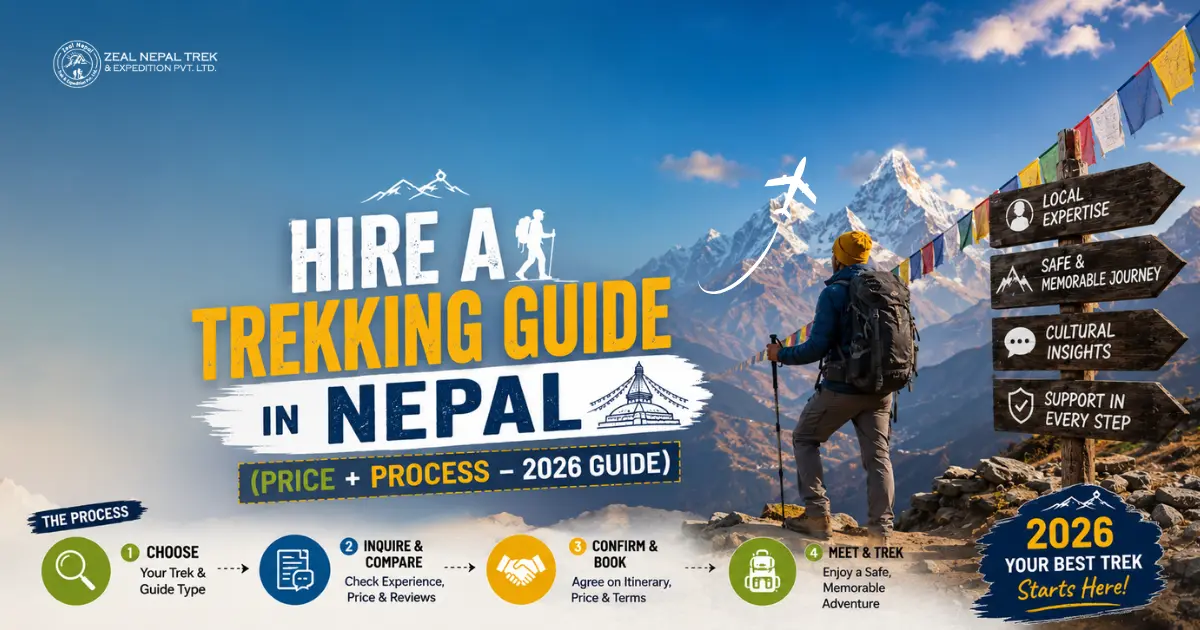
Step-by-Step: How to Hire a Guide
Step 1: Choose How You Want to Book
You have two options:
Option A: Through a trekking company
- Easier, safer, everything handled
- Slightly more expensive
Option B: Independent licensed guide
- Cheaper
- Requires more coordination
Step 2: Verify the Guide
This is where most people make mistakes.
Always check:
- Government-issued license (TAAN or NTB registered)
- Experience in your chosen route
- Basic English communication
If they cannot show a license, do not hire them.
Step 3: Confirm What’s Included
Before you agree, ask clearly:
- Is accommodation included?
- Are permits handled?
- Are transport and flights included?
No assumptions. Everything should be clear upfront.
Step 4: Handle Permits
Most permits are arranged through agencies or guides.
Typical requirements:
- Passport
- Photos
- Permit fees (varies by region)
Permits are mandatory and help track trekkers for safety and rescue purposes .
Step 5: Agree on Daily Rate + Tips
- Pay per day or package
- Tip at the end (usually 10 to 15 percent of total guide cost)
Common Mistakes to Avoid
- Hiring the cheapest guide without checking credentials
- Not confirming what is included
- Assuming you can trek solo
- Ignoring altitude knowledge
These mistakes usually show up when it is already too late.
Pro Insight Most Blogs Won’t Tell You
The difference between a “good trek” and a “bad trek” is rarely the mountain.
It is the guide.
Same route. Same weather. A completely different experience.
Ready to Hire the Right Guide?
You don’t need to message 10 agencies and compare random prices.
Tell us:
- Your trek (EBC, Annapurna, Langtang, etc.)
- Your dates
- Your budget
We will match you with a licensed guide, handle permits, and give you a clear plan with no confusion.
Start planning your trek now. Or message us for a custom guide + itinerary. You can whatsapp us at: +977- 9745389529
Final Thought
You are not just hiring a guide.
You are choosing the person who will be with you when the air gets thinner and the mountains get real.