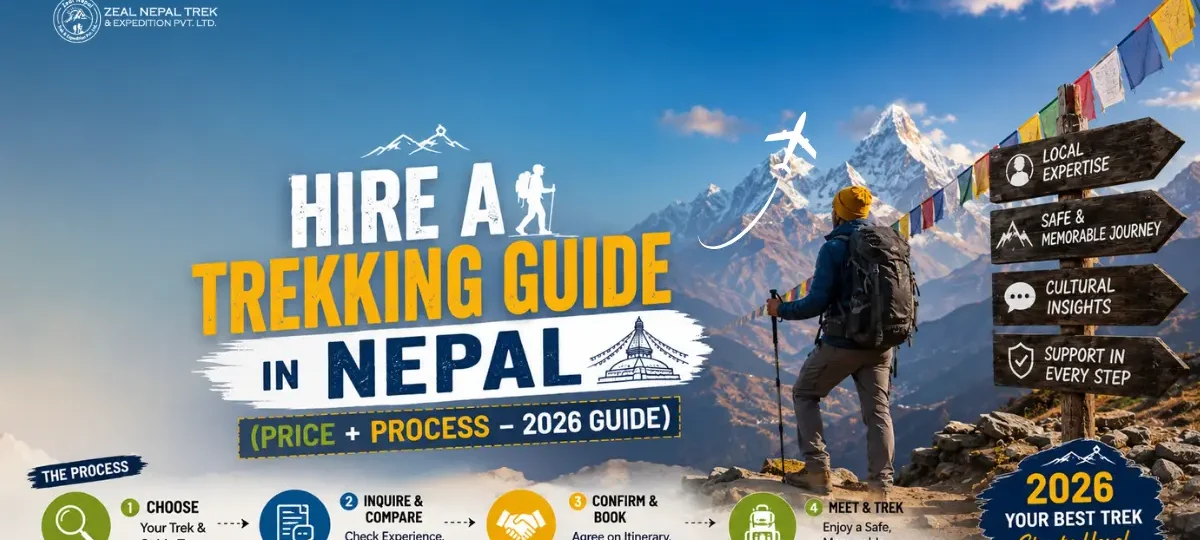
If you are planning to trek in Nepal, this is not optional anymore. It is the first real decision you have to make.
As of recent regulations, foreign trekkers must hire a licensed guide for most trekking routes in Nepal, especially in national parks and conservation areas like Everest, Annapurna, and Langtang . Solo trekking is no longer allowed in these regions, and checkpoints actively verify guide credentials .
So the question is no longer “Should I hire a guide?”
The real question is “How do I hire the right one, at the right price?”
What a Trekking Guide Actually Does

Most first-time trekkers think a guide just walks ahead. That is the smallest part of their job.
A good guide:
- Monitors altitude sickness and your health
- Manages permits and checkpoints
- Books tea houses before they fill up
- Sets a safe walking pace
- Handles emergencies and route decisions
This is exactly why Nepal made guides mandatory. Safety, coordination, and accountability.
Price of Hiring a Trekking Guide in Nepal
Here is the honest range you will find in 2026:
- Licensed trekking guide: USD 25 to 35 per day
- Porter (optional): USD 15 to 25 per day
- Guide + porter combo: USD 35 to 50 per day
What is usually included:
- Guide’s salary
- Accommodation and food for the guide
- Basic insurance
What is NOT included:
- Your permits
- Your accommodation
- Tips (expected at the end)
Important: Cheaper is not always better. A trained, licensed guide can literally save your life at altitude.
Is a Guide Mandatory in Nepal?
Short answer: Yes, in most cases.
- Required in Everest, Annapurna, Langtang, Manaslu, and most major trekking regions
- Solo trekking is restricted or banned in these areas
- Permits are often issued only through registered agencies with guides
Why this rule exists:
- Prevent lost trekkers and accidents
- Improve rescue coordination
- Support local employment
Step-by-Step: How to Hire a Guide
Step 1: Choose How You Want to Book
You have two options:
Option A: Through a trekking company
- Easier, safer, everything handled
- Slightly more expensive
Option B: Independent licensed guide
- Cheaper
- Requires more coordination
Step 2: Verify the Guide
This is where most people make mistakes.
Always check:
- Government-issued license (TAAN or NTB registered)
- Experience in your chosen route
- Basic English communication
If they cannot show a license, do not hire them.
Step 3: Confirm What’s Included
Before you agree, ask clearly:
- Is accommodation included?
- Are permits handled?
- Are transport and flights included?
No assumptions. Everything should be clear upfront.
Step 4: Handle Permits
Most permits are arranged through agencies or guides.
Typical requirements:
- Passport
- Photos
- Permit fees (varies by region)
Permits are mandatory and help track trekkers for safety and rescue purposes .
Step 5: Agree on Daily Rate + Tips
- Pay per day or package
- Tip at the end (usually 10 to 15 percent of total guide cost)
Common Mistakes to Avoid
- Hiring the cheapest guide without checking credentials
- Not confirming what is included
- Assuming you can trek solo
- Ignoring altitude knowledge
These mistakes usually show up when it is already too late.
Pro Insight Most Blogs Won’t Tell You
The difference between a “good trek” and a “bad trek” is rarely the mountain.
It is the guide.
Same route. Same weather. A completely different experience.
Ready to Hire the Right Guide?
You don’t need to message 10 agencies and compare random prices.
Tell us:
- Your trek (EBC, Annapurna, Langtang, etc.)
- Your dates
- Your budget
We will match you with a licensed guide, handle permits, and give you a clear plan with no confusion.
Start planning your trek now. Or message us for a custom guide + itinerary. You can whatsapp us at: +977- 9745389529
Final Thought
You are not just hiring a guide.
You are choosing the person who will be with you when the air gets thinner and the mountains get real.